The disconnect between today鈥檚 classrooms and the demands of the modern workforce has become impossible to ignore鈥攁nd students agree. According to the latest Education Insights Report from 51探花, 80% of students believe that learning content tied to real-world experiences is essential. Yet over 60% doubt the skills 迟丑别测鈥檙别 learning in school prepare them for the workforce, and 71% 补谤别苍鈥檛 excited about entering it.
But what if classrooms operated differently and weren鈥檛 confined by brick walls or a single campus? That鈥檚 the mission driving Dr. Romules Durant, CEO and Superintendent of Toledo Public Schools (TPS). Through his innovative vision for future-ready classrooms, Dr. Durant is courageously transforming education to raise graduation rates, ensure students are career ready, and build a strong community.
Ohio DOE Progress Ratings of
Toledo Public Schools
TPS leads Ohio urban districts in assessment progress with 4 stars.
45% of TPS schools scored at least 3 stars for the progress rating on closing the gap.
TPS Magnets and Academies are On Par or Exceeding the local high school on state testing.
Dr. Durant knows it can feel risky taking on a new approach, especially if stakeholders don’t fully see the vision yet, but he isn鈥檛 afraid to explore new avenues for bridging the gap between classrooms and industries. He actively collaborates with industry leaders who share his vision and are eager to partner with him. 鈥湵醭兮�檚 about taking calculated risks to change how schools operate,鈥� he explains.听
Since Dr. Durant started in his role as Superintendent, Toledo Public Schools has turned into a top-rated school district in the state, and a model for others in how to implement successful work-ready programs, magnet schools, and specialized academies.听In the latest Progress Rating from the Ohio Department of Education, nearly half of Toledo Public Schools received an Overall Rating of 3 or more stars, meaning they meet, exceed, or significantly exceed state standards.
Bridging Industry and Classroom鈥�
The concept of future-ready classrooms starts with an 鈥渙utside the box鈥� perspective on bringing industries into the learning environment, and the determination to build strategic relationships with those who can make the concept a reality.听 Dr. Durant and his team at TPS saw an opportunity to integrate the resources and expertise of their community to create hands-on, real-world learning experiences and work-based learning programs that focus on career exploration. This type of innovation requires thoughtful planning, relationship building, and of course, bravery. For Dr. Durant, that meant building trust and collaboration with all stakeholders, like the school board and local business leaders. Together, they decided to invest in initiatives that may not yet be the norm in K-12 education but show tremendous promise.
Redefining the Classroom
Classrooms don鈥檛 have to be just spaces for textbooks and whiteboards鈥攅nvision multi-functional learning campuses that serve students, families, and communities alike. 听
The at Toledo Public Schools are the perfect example of redefining the classroom. Today, six hubs offer academic and work-based learning opportunities for students as well as services and programs for the community, like financial management, childcare, homecare for senior citizens, mental health services, and even entertainment. 滨迟鈥檚 a dual-benefit model that exemplifies how blending education with community resources can make a tangible difference.

The Power of Work-Based Learning
Career exploration should be central to every student鈥檚 academic journey, starting as early as elementary school. In fact, according to the Education Insights Report, 90% of middle schoolers today want more exposure to different career paths, while 88% wish they had more resources to better prepare them. 听
Many countries around the world provide young students the opportunity to explore careers through work-based learning such as apprenticeships, intern- and externships, and immersive, future-ready classrooms.听After an externship in Germany to study their workforce development programs, Dr. Durant implemented a strong emphasis on immersion. “That trip really helped set the stage for how to go about workforce development,” explains Durant. “We started erasing boundaries of communities and putting education at the place of industry . . . Imagine if you were able to go to school from 7-12th grade AND earn a degree at that place of industry. How better prepared you would be for the workforce!”
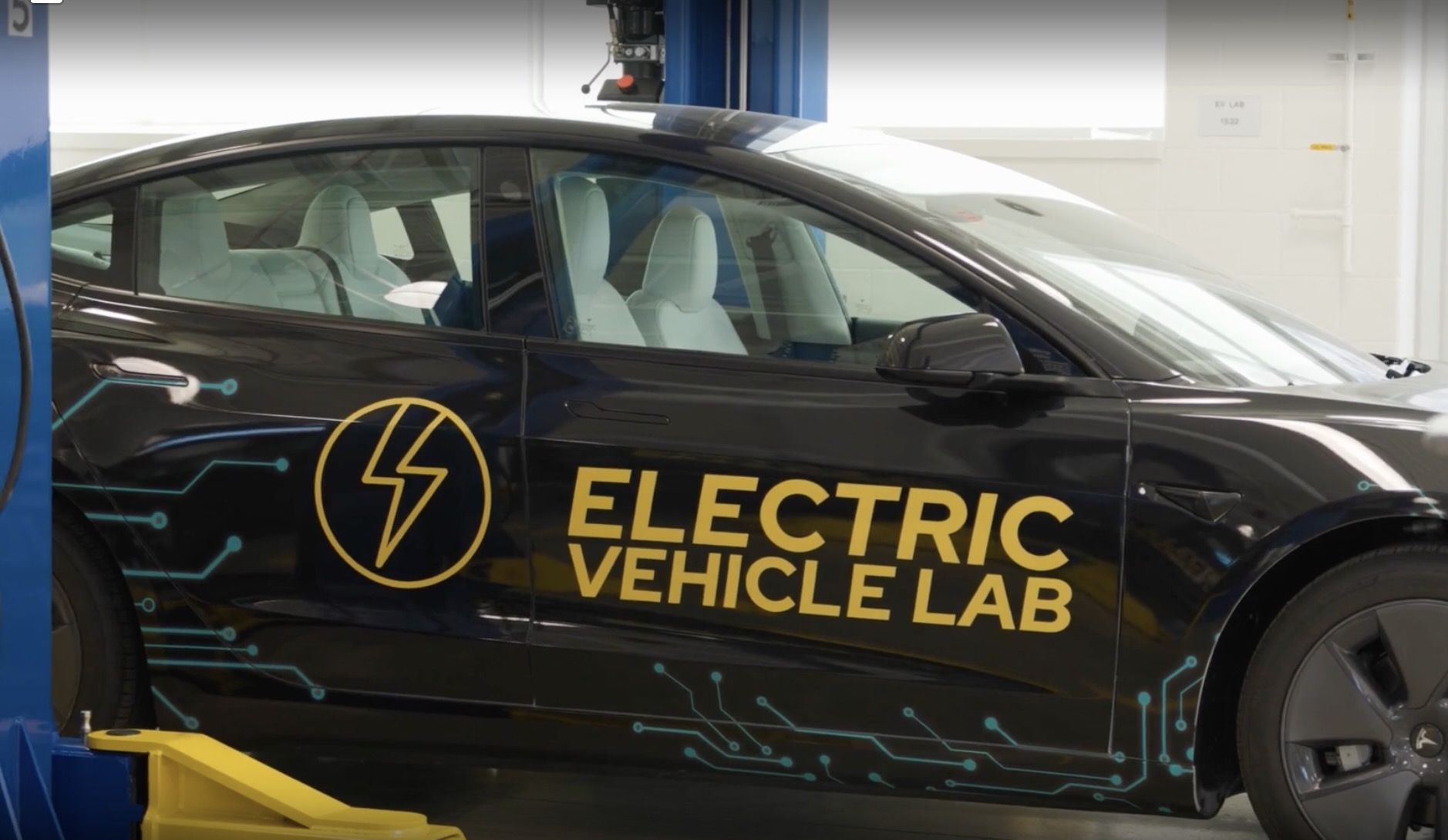
For example, the for grades 7-12 allows students to explore engineering in a fully immersive learning environment with the Electric Vehicle lab, the first of its kind for an Ohio public school. With 11,000 sq. ft. of space, including six vehicle lifts for hands-on learning and a classroom, this lab gives students the opportunity to learn firsthand about cutting-edge technology, as well a current mechanics and displaced autoworkers a chance to enhance their own skillsets and careers.听
Another inspiring example is the 鈥�the aerospace campus is located at the airport where students can work on airplanes and even earn their pilot鈥檚 license, while the natural science campus is just next door to the Toledo Botanical Gardens.
鈥淚t’s about aligning kids to things they have an interest in, exposing them to career pathways, and that excitement is what brings them to school,” explains Dr. Durant. “I tell other superintendents that if you connect a student to a career pathway, that’s an increase in your graduation rate . . . the student is aligned to something where they can see and understand why this science experiment or this math skill they are learning matters.鈥�
Through these programs, learning feels relevant. Students 补谤别苍鈥檛 memorizing equations in isolation; 迟丑别测鈥檙别 applying them on the job floor, in hospitals, and in labs. 罢丑别测鈥檙别 building confidence as they earn credits toward 2- and 4-year degrees, as well as trade certifications, all while seeing firsthand how their future-ready classrooms tie directly to real-world careers.
Funding Innovation Through Relationships
None of these innovations are possible without financial stability and support. And听Dr. Durant has proven that calculated risks yield remarkable rewards by establishing strong relationships with those who hold the purse strings.听鈥湵醭兮�檚 through a strong relationship with the school board,鈥� Dr. Durant says, 鈥渢hat we鈥檝e been able to mitigate risks and ensure we have the resources we need to launch programs that truly change how students learn.鈥�
Securing local funding for future-ready classrooms also needs strong relationships with the community. Partnerships with local businesses, nonprofits, civic organizations, school boards, and city councils provide a wealth of opportunity for funding because all those involved have the same goal: ensuring students become successful members of the community.
Empowering Students. Strengthening Communities.
The goal of future-ready classrooms is clear鈥攑repare students to thrive in a dynamic world. Students get a head start on building skills and earning credits, so upon graduation, 迟丑别测鈥檙别 equipped with knowledge and experience to jumpstart their careers. Communities benefit, too. When young people feel supported, they want to work and live in the same neighborhoods that nurtured their potential, creating a strong, thriving local workforce.听
At TPS, this isn鈥檛 just a vision鈥攊t鈥檚 happening. Leaders like Dr. Durant are setting the standard, offering a clear model for schools and communities to follow. 51探花 is proud to stand alongside courageous leaders like Dr. Durant to prepare future-ready students. We are continually innovating career exploration resources like Career Connect and the , as well as听building partnerships with industry leaders听that share our vision, to support career and workforce programs designed for 21st century students.听听听
With unique partnerships between 51探花 and industry leaders, those same schools and communities can deliver students their holistic vision of what it means to be ready for the future.听 Together, we鈥檙e rethinking education, one calculated risk at a time.